What is ADAS, and How Does it Work ?
The vast majority of road accidents are caused by human errors. ADAS, or Advanced Driver Assistance Systems, were invented and implemented to counteract them. While the name may sound unfamiliar to some, ADAS are now commonplace in everyday life. For example, in newly produced cars, some of these systems are mandatory for car manufacturers to install. What are the components of ADAS, and how do they work?
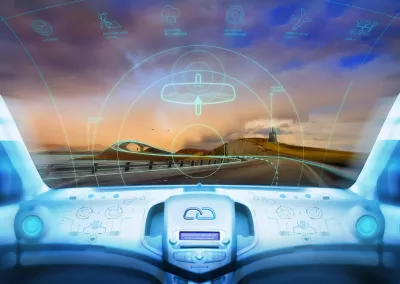
What does ADAS stand for ?
Advanced Driver Assistance Systems (ADAS), comprises a group of automotive systems. Utilizing multiple sensors, cameras, and radars, ADAS systems monitor the car's surroundings. After processing the data in control units, the output units can react promptly when necessary.
The first ADAS were introduced in the 1970s, with the Anti-Lock Braking System (ABS) being the initial driver assistance system. ABS is now a standard feature in almost every car on the roads today.
Over time, engineers have continuously developed new safety systems, leading to the current situation where vehicles are equipped with numerous advanced systems capable of autonomous driving. Why? Consumers are increasingly prioritizing safety features when purchasing vehicles. With growing awareness of road accidents and their consequences, people are seeking vehicles and solutions that offer advanced safety technologies to protect themselves and their loved ones.
Need to calibrate your ADAS system?
Contact your Glassdrive center now !
What is the ADAS function ?
All ADAS components were designed to be helpful for drivers, serving as a supplement when humans are unable to perform certain tasks that could lead to dangerous situations on the road.
These engineering achievements, coupled with human abilities, aim to minimize road accidents and ultimately save lives and preserve health.
What is ADAS in a car ?
As mentioned, ADAS had its beginnings in the 1970s. However, over the years, the number of ADAS has increased so significantly that it would be difficult to list them all.
Autonomous systems
Starting with one of the oldest and most common systems, ABS - Antilock Braking System - monitors the speed of each wheel of the car. During braking, it can adjust the braking force on each wheel separately as needed to prevent the car from skidding and to maximize braking efficiency.
The same components and mechanisms are used for other driver assistance systems, such as ESP (Electronic Stability Program) and TCS (Traction Control System). Unlike ABS, ESP is designed to prevent car skidding during acceleration and driving through corners, even without driver braking. ESP and TCS can independently apply brakes and limit engine power to prevent wheel spinning during acceleration, thus helping to maintain the car's intended path.
The latest advancements in ADAS include systems capable of assuming the driver’s role. Among them is Lane Keep Assist (LKA), a system designed to detect lane markings on the road and autonomously steer the car to maintain its position within the correct lane, without requiring any input from the driver. Thus, it represents a more advanced iteration compared to the previously mentioned LDWS.
Another component of ADAS is cruise control, but it is more advanced compared to the standard version, known as Adaptive Cruise Control (ACC). In addition to the basic function of cruise control, which is maintaining a set speed, ACC can also adjust the speed according to the vehicle in front and even bring the vehicle to a stop if the vehicle in front stops. ACC can also integrate with a traffic sign recognition system, enabling it to adjust the speed based on the currently applicable speed limit.
Automatic Emergency Braking (AEB) appears to be the most complex system among ADAS. AEB utilizes parking sensors (while reversing), cameras, radars, and LiDAR (Laser Imaging, Detection, And Ranging). These components monitor the surroundings, and when the system detects the risk of collision (after processing the data), it signals the car to initiate braking.
There are many types of AEB systems designed to prevent:
- collision with cars ahead,
- collisions with pedestrians or cyclists,
- collisions during reversing.
Some AEB systems are designed to operate in city traffic under specified driving speeds (for example, 80 kph), while others have universal use with no speed limitations.
The primary goal of AEB is to prevent collisions. However, there are instances where prevention is not possible, and the system can only achieve speed reduction before a crash."
Warning systems
Some of the systems are intended to be helpful tools for drivers, with their usage depending solely on the driver. Here are some examples of such systems:
- Front and rear parking sensors,
- Rearview camera,
- Blind spot assist,
- LDWS (Lane Departure Warning System).
These types of systems help drivers see what they may not be able to perceive directly, providing an additional sense to use the car safely. When there is an obstacle near the car that the driver might not notice, these systems provide optical, acoustic, or haptic warnings.
Another system that provides warnings to the driver in specific situations is Driver Alert. This system uses cameras and control units to monitor the driver's behavior, movements, and driving style. When the driver's behaviors indicate drowsiness, the system sends acoustic, optical, or haptic warnings and advises the driver to take a break.
Levels of vehicles automation – ADAS in automotive
ADAS is closely connected with vehicle automation. Depending on the number and types of Driver Assistance Systems installed in the car, the vehicle is assigned to a specified level of automation.
Level 0
The first level is 0, in which the driver has complete control over the car. The driver has access to only some systems that assist him in specific situations. One of these systems may be LDWS, which provides the driver with information about lane departure but cannot correct the car's path by itself.
Other examples include sensors and cameras that warn the driver about obstacles while parking or driving.
It may be surprising, but the AEB system is also part of level 0. This is because it operates only during specified critical situations, similar to ESP or ABS.
Level 1
We are dealing with level 1 when a car is equipped with one of the systems that can either steer or accelerate and brake the car. For example, the car can be equipped with Lane Keep Assist, which corrects the path of the car, or Adaptive Cruise Control, which maintains the speed of the vehicle ahead. However, when a car is equipped with both of these systems, it advances beyond level 1.
Level 2
In that case, the car belongs to level 2, where the Driver Assistance Systems can steer and accelerate/brake the car simultaneously. For both levels 1 and 2, a driver can turn off systems or take control of the car at any time. Even when using systems, a driver must observe surroundings and be ready to react when necessary.
Level 3
In level 3, a driver can take a break from actively driving and does not have to observe the surroundings, as the systems take complete control over the car. However, the driver must be able to react after receiving a warning sent by some of the ADAS components.
Level 4
Level 4 differs from the previous one in that the driver is no longer obligated to react and can even sleep while driving. This level can currently be used under certain conditions, such as on highways or defined routes.
Level 5
Level 5 describes a fully autonomous vehicle that can drive under all conditions without any assistance from a human. In this type of vehicle, there are no longer drivers, only passengers. It is important to mention that the legal and ethical framework surrounding autonomous vehicles is still evolving, and there are many unanswered questions regarding liability, insurance, and regulatory oversight.
ADAS – present and future
Nowadays, cars are equipped with a vast array of Driver Assistance Systems, and the trend is undoubtedly moving towards fully autonomous vehicles. Despite the significant development in ADAS, drivers are still essential in cars and will remain so for quite a few years.
Make sure your car is safe!
Contact your Glassdrive center !
Another key issue is maintaining all the systems in impeccable condition. Even if a car is equipped with the newest systems, poorly serviced or improperly calibrated ADAS can pose more danger than assistance to the driver.
Furthermore, drivers must be aware of how to use the systems correctly, following the car manufacturer’s recommendations. All systems have strictly defined testing procedures (for Europe included in United Nations – Regulations of the Economic Commission), and compliance with the rules of use and servicing ensures the systems work as intended.