ADAS System Calibration – When and How to Do It ?
Advanced driver assistance systems (ADAS) are a top innovation in car technology, and all new cars are likely to come outfitted with at least some form of this safety software. With the ability to gather unique information about vehicle surroundings, sensors are used to determine when there may be threats to the safety of the vehicle and alert drivers in real-time. With the right ADAS system, you'll have the ability to troubleshoot potential road issues, and some will even be able to take temporary control over significant aspects of the driving experience, such as steering or breaking, to provide ultimate security while on the road. To ensure that ADAS systems within cars perform at their best, calibration will be a necessary protocol. With this in mind, let's have a look at ADAS system calibration – and when and how to do it.
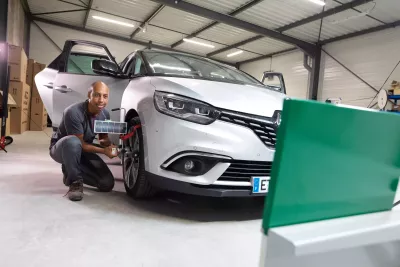
What is ADAS calibration ?
Before you consider the best approach to ADAS system calibration, it will be important to understand exactly what ADAS systems are, how they function and any necessary information that will help you to drive your car safely. Firstly, advanced driver assistance systems are auto safety features that comprise cutting-edge software and sensors to provide an unrivalled level of driver safety. New vehicles will come specifically calibrated to the car model as standard, but vehicle damage or repairs can impact performance. This means that if anything happens, ADAS systems will need to be recalibrated.
Calibration relates to the precise physical alignment of sensors and will cover electronic aiming capabilities to ensure that data is properly collected and conveyed to the necessary ADAS system features. This can include:
- Forward collision warnings (FCW)
- Lane departure warnings (LDW)
- Automatic emergency braking (AEB)
- Blind spot warnings (BSW)
- Rear cross traffic alerts (RCTA)
There are many more functions that can be highlighted by ADAS, and it’s important to note that these will be dependent on the ADAS systems in car options, such as steering-angle sensors, front-facing, or rear-facing camera sensors.
With differing ADAS sensors in mind, it’s important to note that their positioning means that misalignment during repairs can be common, especially when it comes to windshields or tires.
Why is ADAS calibration important ?
Anyone with even a little experience with the ADAS systems will tell you that calibration is pivotal to safety, as even the slightest misalignment of sensors will impact performance. For example, one sensor focusing on the wrong area by as little as a mm or degree can change the vantage axis as you travel along the road - and potential obstacles or issues such as potholes may be missed. As ADAS systems don’t have self-diagnostic capabilities, drivers won’t likely be aware that there is a misalignment issue until it’s too late.
Who can perform ADAS system calibration ?
ADAS system calibration should only be undertaken by Glassdrive technician who have experience with and follow the outlined OEM standards regarding ADAS calibration. Only an expert will be able to properly calibrate ADAS systems to industry standards, with the make and model of the car in mind, to ensure that everything functions exactly as it should.
Types of ADAS calibration
There are two types of calibration that may have slight variances in operation, as the ADAS system in car models will typically vary. These are static calibration and dynamic calibration. As each will need their own tailored approach and calibration will likely be necessary at different times, it can be important to find an automotive professional who is well-versed in the specific type of calibration for the right results.
Static ADAS calibration
Static calibration is the most popular ADAS calibration treatment. This typically will be undertaken in a controlled environment while the car is kept stationary. An automotive professional will use specialised tools in a clearly-rendered space to diagnose misalignment and precisely reset sensor angles to their factory preset parameters. This is because mechanics will need a certain amount of open space to work in, a level floor, uniform and adjustable lighting with no direct sunlight and a few other environmental requirements.
In terms of equipment, they should have all the traditional mechanics tools alongside car manufacturers' tailored diagnostic tool for ADAS scanning (these can vary), aiming targets and measuring tapes or laser measuring devices to ensure precision. There may be cases where the ADAS system in car models will require a degree of manual adjustment, but all processes should be finalised digitally.
Need to calibrate your ADAS system?
Contact your Glassdrive center now !
Dynamic ADAS calibration
Dynamic calibration is where Glassdrive technician will perform an in-depth test drive while connected to an ADAS scanning tool. This will require testing the vehicle at different speeds and in varying conditions. This process will vary by OEM, and could potentially require two technicians, so that testing and digital tool operation can work simultaneously.
Note: There will be instances where dynamic collaboration will suffice to ensure ADAS systems and sensors are functioning as expected. Not all ADAS system features will require in-depth treatment, and it is worthwhile to keep in mind that in most cases, static collaboration will include dynamic collaboration as the final step.
When should ADAS systems and sensors be calibrated ?
There are actually multiple instances where recalibration for ADAS systems will be necessary. In the most common cases, are after the entire windscreen replacement or accidents that are damaging in any way the ADAS system. Usually the calibration is not done automatically for repair.
Remember that anything that can knock sensors out of alignment probably will, so don't be complacent. It will be imperative to have recalibration taken care of at any and every repair or replacement of windshields, especially as new car models will often have front-facing sensors and cameras mounted in this area. Alongside this, if you have any maintenance undertaken on your tires or breaks, including tire rotations, recalibration will likely be necessary. In many cases, this should come as part of the maintenance/repair process, but be sure to ask in case ADAS system features aren't covered.
For ultimate car safety, always keep in mind that vehicles should not be driven without proper ADAS calibration. There can be some significant malfunctions in safety features and a myriad of potential driving hazards that can occur, and of course, safety is paramount.