ADAS Support for Truck Drivers
ADAS technology is an innovative vehicle safety feature that has been enhancing the driving experience for vehicle owners since as early as the 1970s. As you’d imagine, advanced driver assistance systems are now more functional and intuitive than ever before in 2024. With the ability to provide drivers with warnings and visual, audio, or physical notifications regarding dangerous road conditions and potential hazards, they can avoid potential issues that may otherwise cause unwanted downtime or vehicle damage. As a truck driver, it can be an intrinsic risk management system, so let's have a look at what ADAS support means for you.
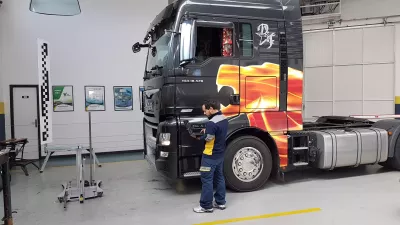
Important information about ADAS support for truck drivers
The first thing that you’ll want to know is that ADAS is a warning-based vehicle system that utilises a combination of hardware and software to help drivers boost their reaction times. In some cases, systems can potentially take over vehicle functions, such as operating the brakes or manipulating steering wheel functions. The typical features include :
Adaptive cruise control and accident avoidance
Adaptive cruise control is an integral part of ADAS systems and will allow truck drivers to set travel speeds and adjust practices to meet specific conditions on the road in real time. This includes detecting and adapting to changes in traffic, as well as automatic deceleration if vehicles ahead of the truck are driving too slowly. Some installations will be able to trigger breaking systems for accident avoidance when individuals, other vehicles, or obstacles come too close to the front of the truck.
Need to calibrate your ADAS system ?
Contact your Glassdrive center now !
Pedestrian detection
Similar to adaptive cruise control, ADAS will signal drivers when pedestrians are detected ahead of the vehicle. Typically, the vehicle will decelerate, but if the pedestrian appears at an unavoidable distance, the brakes may instantly activate for the safety of both parties
Lane keeping assist
If your truck is fitted with lane keeping assist, an audio signal will warn you if your vehicle is veering into another lane. This can potentially be accompanied by visual notifications or physical warnings, such as a vibration in the steering wheel. In these instances, truck drivers will be able to increase their response times and potentially avoid road accidents associated with loss of concentration, drowsiness, or poor visuals on the road.
Blind-spot monitoring
Truck drivers are more likely to experience blind spots than traditional vehicle owners, so blind spot monitoring can be extremely worthwhile. This feature will sound an alert as the driver signals to change lanes if there is another vehicle in a blind spot nearby.
Rear cross-traffic monitoring
Just as with blind spots, reversing a truck can be a concerning time for drivers, so ADAS systems will warn you if your truck is backing up, either as another vehicle approaches the rear or if there is an unseen obstacle that needs to be avoided.
As you can see, whether only one ADAS feature is installed or truck drivers have access to multiple systems, there are some unrivalled safety mechanisms that can be utilised to minimise the risks associated with an array of common vehicle and road accidents (as long as ADAS calibration is functioning to OEM standards, of course).
How does ADAS in trucks work ?
If you have only been driving a truck for a short amount of time, you may not realize what ADAS systems are or understand that these features are not unique. It is suggested that only 4 in 10 commercial fleets with heavy truck vehicles have ADAS installed, but this is becoming more common every year. ADAS features that provide sound alerts, haptic feedback, or similar notifications are considered passive, whereas those that intervene (such as slowing the vehicle or full brake activation) are known as active. Typically, trucks will be fitted with sensors and cameras that are used to gather information concerning the truck’s immediate environment and trigger events that can either warn or intervene to mitigate traffic accidents and minimise risks on the road.
How is ADAS changing the commercial vehicle industry ?
As technology continues to improve daily life, more and more commercial fleets are being fitted with cutting-edge vehicle technologies that are able to increase productivity, boost driving safety and even potentially save money for both drivers and businesses. With the fast and intuitive warning signals provided by ADAS, fewer trucks on the road will suffer damage or destruction.
It's no secret that one of the biggest factors behind driving issues can be human response times, and this is where ADAS technology is stepping in to provide an overall safer approach to active road use. Many systems are now installed in trucks as standard, but others will be considered aftermarket features, especially as technology continues to improve and innovate to meet demand and continue to push industry standards towards a better driving environment. These are not currently classified as automation technologies, but are certainly thought to be the first step in self-driving capabilities that could further be developed in the future.